English/Nat
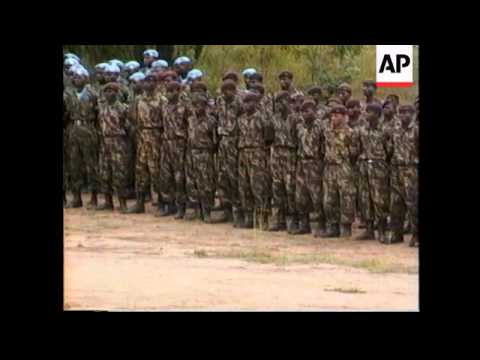
Soldiers from nine southern Africa countries – some of them long-time foes – have begun joint military manoeuvres that could lead to the formation of the continent’s first joint peacekeeping force.
The 14 days of training in eastern Zimbabwe are aimed at preparing the troops for intervention in conflicts throughout Africa.
A few years ago this scene would have been unimaginable.
Soldiers from South Africa in step with their former enemies.
Assisted by European, U-S and United Nations officials, South African soldiers are working with their former enemies in military exercises which may well lead to the formation of the first multi-national southern African peacekeeping force.
The Nyanga manoeuvres are taking place in “Mycosa”, which stands for Mythical Country of Southern Africa, where a fake civil war is raging.
The 14-day exercise replicates an authentic conflict scenario including the movement of refugees, delivery of food aid, exchange of prisoners and mediating peace.
It represents South Africa’s key role outside its own borders for the first time since the nation’s democratic elections in 1994.
During the apartheid era, South African troops fought against South African guerrillas based in neighbouring countries and waged a destabilisation effort against black
governments.
Civil war in nearby Zaire is just one example of explosive situations which have led to recent calls for an all-African peacekeeping force.
General Mike Nyambuya, a veteran of United Nations peacekeeping in Angola and Somalia, told participants to put aggression aside and to become soldiers of peace.
SOUNDBITE:
“The southern African region is currently enjoying peace and tranquillity. To preserve and consolidate the existing peace there’s a need for regional mechanisms that will facilitate timely reaction to unforeseen volatile security situations and likely threats to peace.”
SUPER CAPTION: General Mike Nyambuya
Western countries have pledged to help finance and provide logistical backing for peace keeping in Africa as long as they don’t have to risk the lives of their troops.
You can license this story through AP Archive:
Find out more about AP Archive:
source






Be First to Comment