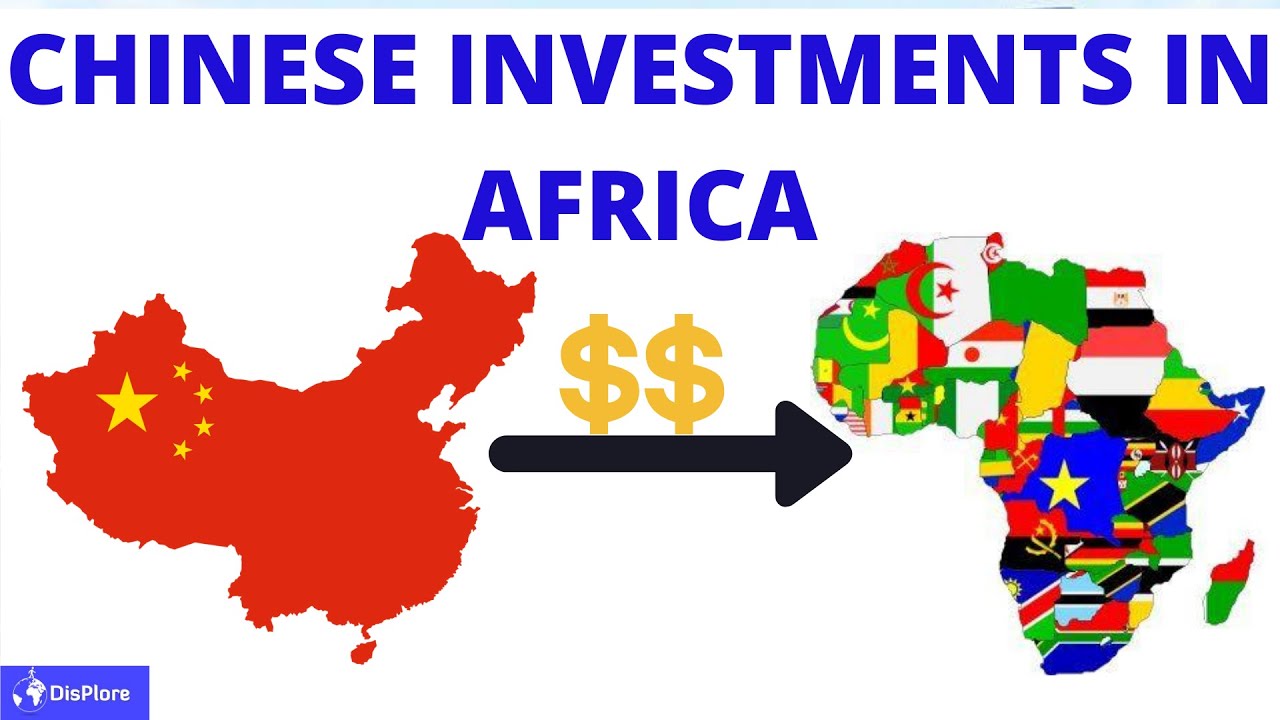
Top 10 African Countries with the Most Chinese Investments
Hello Displorers, welcome to another exciting video presented to you by Displore and thanks for watching. In this video we shall be presenting the top 10 African countries with the most Chinese investments.Economic relations between China and Africa began in the 7th century and continue through present day. China seeks resources for its growing consumption, and African countries seek funds to develop their infrastructures.Large-scale structural projects, often accompanied by a soft loan, are proposed to African countries rich in natural resources. China commonly funds the construction of infrastructure such as roads and railroads, dams, ports, and airports. Sometimes, Chinese state-owned firms build large-scale infrastructure in African countries in exchange for access to minerals or hydrocarbons, such as oil. In those resource-for-infrastructure contracts, countries in Africa use those minerals and hydrocarbons directly as a way to pay for the infrastructure built by Chinese firms.While relations are mainly conducted through diplomacy and trade, military support via the provision of arms and other equipment is also a major component. In the diplomatic and economic rush into Africa, the United States, France, and the UK are China’s main competitors. China surpassed the US in 2009 to become the largest trading partner of Africa. Bilateral trade agreements have been signed between China and 40 countries of the continent. In 2000, China Africa Trade amounted to $10 billion and by 2014, it had grown to $220 billion.
If you are new here, welcome, be sure to subscribe and turn on notifications so you don’t miss any of our videos.
The presence of diamonds, gold, silver, uranium, cobalt and large oil reserves have brought Africa to the forefront of industrial development, with many of the world’s economic powers building relations with Africa’s resource rich nations. China has not stayed behind as it is one of the highest countries presently with huge investments in Africa because of the presence of raw materials. China has indeed invested more in some countries due to what they offer as rewards as well as the policies of the country. Hence, here are the top 10 African countries with the most Chinese investments.
10. Chinese Investments in Mozambique
China Mozambique relations date back to the 1960s, when China began to support the struggle of Mozambique’s Marxist-oriented FRELIMO party against Portuguese colonialism. Diplomatic relations were formally established on the 25th June 1975, soon after Mozambique gained independence from Portugal. China mainly imports agricultural and fisheries products from Mozambique, but few raw materials, while exporting manufactured goods and machinery. Between 2004 and 2006, bilateral trade tripled in value from US$70 million to US$210 million, making China one of Mozambique’s three largest trading partners, behind South Africa and Portugal. China has also become an increasingly important player in Mozambique’s construction industry; over one-third of Mozambique’s new road construction is now carried out by Chinese contractors. Contractors from other countries, who have been losing out on business due to their higher costs, complain that the Chinese contractors make no effort to transfer skills or technology to locals, and do not make use of local or regional labor subcontractors, instead preferring to import and manage their own workers. However, Chinese-run construction sites are better-organized and have a lower rate of pilferage.
9. Chinese Investments in Cameroon
China and Cameroon established bilateral relations on March 26, 1971. Since the first Forum on China Africa Cooperation in 2000, Beijing has successfully delivered $2.4 billion in development finance to Cameroon. $87 million of that total falls under the OECD-DAC criteria for Official Development Assistance. Major projects executed by the Chinese government in Cameroon include: Construction of the Kribi Deep Seaport, construction of the Memve’ele hydroelectric Dam in Nyabizan, construction of a malaria research center at Yaoundé’s Hospital of Gynecology, Obstetrics, and Pediatrics all funded by the Exim Bank of China with millions of dollars. Yearly trade topped $854 million in 2008, before dropping to $813 million in 2009 due to the global recession. In the 2000s, some in Cameroon considered the economic relationship to be a form of neo-colonialism; this was mainly due to a perception that Chinese traders flooded the Cameroonian market with cheap but extremely fragile manufactured goods, which stymied the development of local industries.
8
source






Be First to Comment