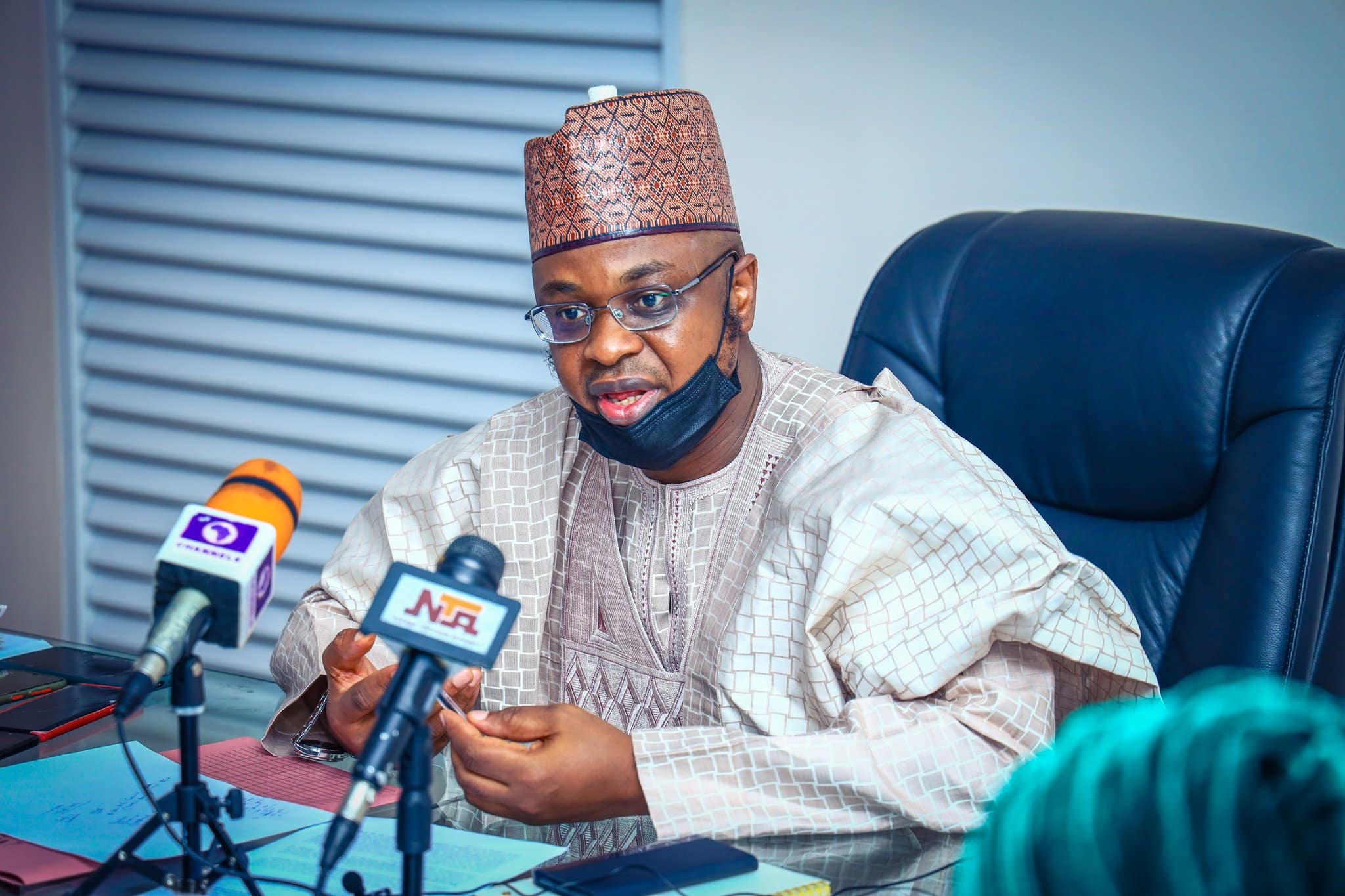
A retired Assistant Director of the Department of State Services, Dennis Amachree, has said the appointment of Isa Pantami as Minister of Communications and Digital Economy under former President Muhammadu Buhari raised serious questions about Nigeria’s security vetting system.
Naija News reports that Amachree made the assertion in his memoir, DSS @40: My Journey Behind the Shield, in which he reflected on his four decades of service in Nigeria’s intelligence community.
The former DSS official revisited the controversy that surrounded Pantami in 2021 after old sermons and public comments attributed to him resurfaced online.
The statements allegedly showed sympathy for extremist organisations, including al-Qaeda, the Taliban and Boko Haram, triggering widespread public debate at the time.
According to Amachree, the controversy raised concerns over how a person appointed to oversee Nigeria’s telecommunications and digital infrastructure scaled the security screening usually conducted for nominees to sensitive government positions.
Amachree explained that the DSS routinely conducts extensive background investigations on persons nominated for strategic public offices.
He said such checks could cover previous affiliations, speeches, educational history, political tendencies, personal associations and online activities before intelligence assessments are forwarded to the President and, where necessary, the National Assembly.
The retired officer, however, stressed that the DSS could only make recommendations and did not have the final authority over appointments.
Although Amachree said he could not confirm the actual contents of the security report prepared on Pantami, he argued that it was unlikely the former minister’s earlier comments would have escaped the attention of intelligence officers.
He said, “In Pantami’s case, it is my belief that the DSS report likely contained references to his earlier extremist sympathies.
“However, when political imperatives such as federal character balancing, internal party politics, or strategic regional representation enter the equation, security advice can be sidelined.”
Senate Confirmation Questioned
Amachree also recalled Pantami’s confirmation by the Senate.
He noted that Ajibola Basiru, who was then Chairman of the Senate Committee on Media and Public Affairs, had said lawmakers did not receive any adverse security report against Pantami before approving his nomination.
According to the former DSS officer, the development illustrated what he described as “the politicisation of intelligence”.
He said, “There are two plausible interpretations here: either the DSS report was sanitised before reaching the Senate, or it was submitted with adverse findings that were simply disregarded due to political considerations.
“Both scenarios reflect systemic weaknesses in Nigeria’s national security framework, either in the flow of intelligence or in the institutional request for security recommendations.”
Amachree further argued that the controversy damaged public confidence in Nigeria’s counterterrorism campaign.
He said the situation created an apparent contradiction in which the government was prosecuting insurgents while defending the appointment of a senior official whose earlier statements had been subjected to intense scrutiny.
The retired intelligence officer said the matter was particularly sensitive because Pantami headed a ministry responsible for telecommunications and other critical digital infrastructure.
He said, “The controversy exposed deep contradictions in Nigeria’s counterterrorism strategy.
“While the country has expended billions of naira combating Boko Haram, ISWAP and other extremist groups, it simultaneously appointed a minister with a documented history of expressing extremist views.”
Amachree said lessons from the episode should guide future administrations when considering nominees for sensitive positions.
He described the controversy as “a cautionary tale” and called for greater institutional respect for intelligence assessments.
“It highlights the urgent need to strengthen institutional respect for intelligence assessments,” he added.
He maintained that insulating national security decisions from political considerations would strengthen public confidence and improve the credibility of Nigeria’s security institutions.





Be First to Comment